China has the world’s largest vehicle population, and automated car washing equipment has become essential infrastructure rather than an optional service. Rising labor costs, tighter environmental regulations, and increasing consumer expectations have fundamentally changed how car wash investments are evaluated.
Today, equipment selection directly affects long-term operating stability, cash flow predictability, and return on investment.
For investors and operators, the most common strategic decision is whether to install a chinese car washing machine or choose a European-manufactured system.
While the initial purchase price often draws attention, the real comparison lies in total cost of ownership, operational adaptability, and capital recovery speed. This article provides a structured comparison designed specifically around China market conditions.
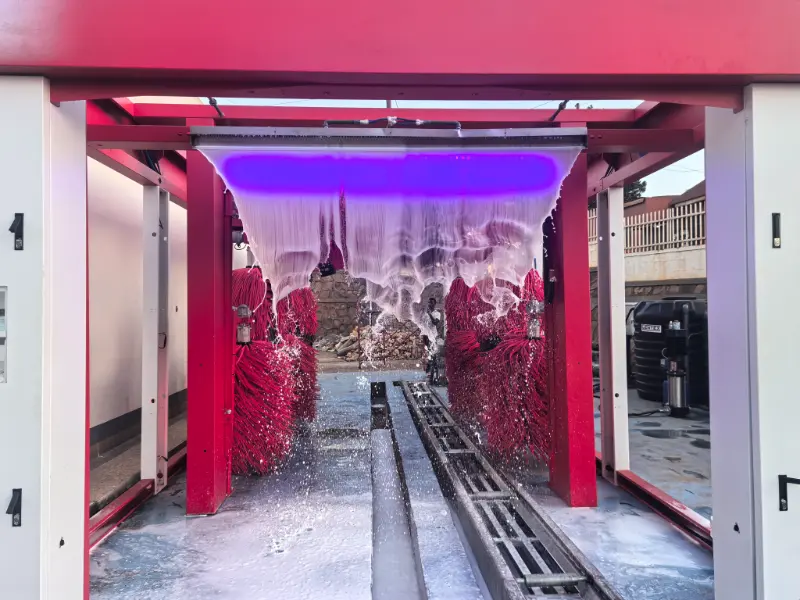
A modern chinese car washing machine is no longer a low-cost substitute for imported equipment. China has developed into the global manufacturing center for automatic car wash systems through industrial scale, supply-chain integration, and rapid technology iteration.
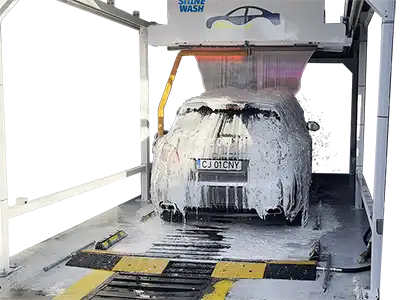
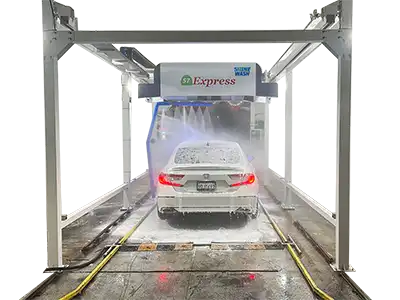
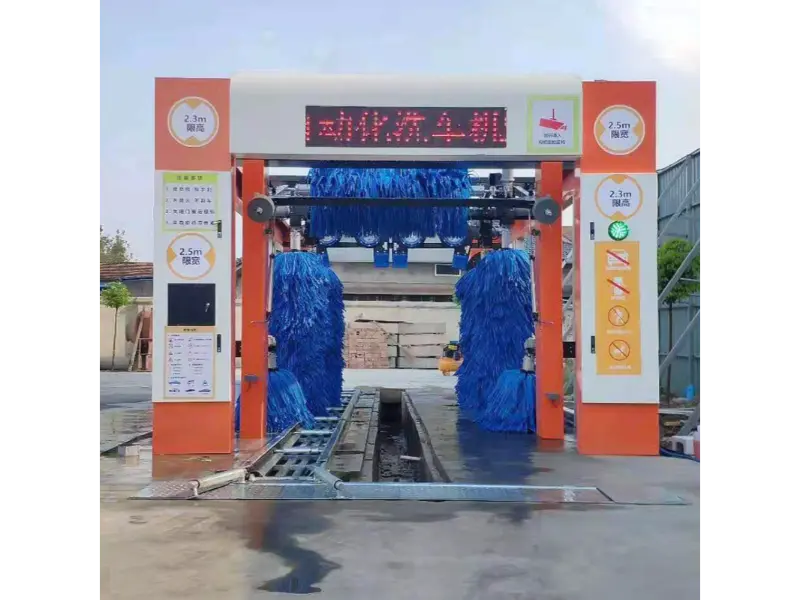
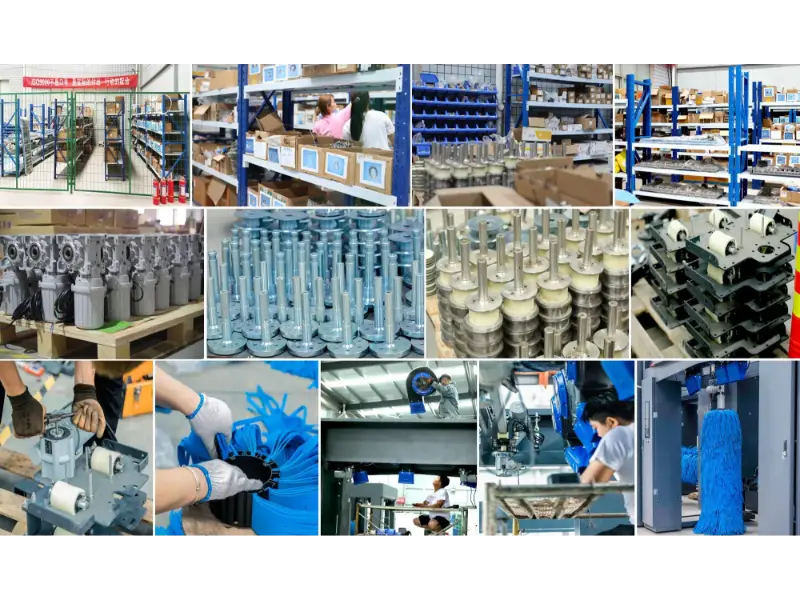
Chinese manufacturers benefit from direct access to motors, pumps, PLC controllers, steel fabrication, and electronic components. This allows them to control production cost while maintaining consistent engineering standards. Today, chinese car washing machines include touchless rollover systems, brush-based rollovers, tunnel car wash systems, and self-service solutions, all designed for high-frequency commercial operation.
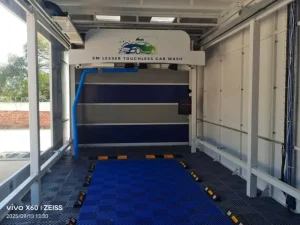
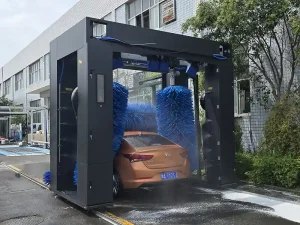
These systems are widely deployed across fuel stations, shopping centers, residential complexes, logistics depots, and fleet washing facilities. Their design philosophy emphasizes fast installation, stable performance, and rapid service response, which aligns closely with China’s dense and competitive operating environment.
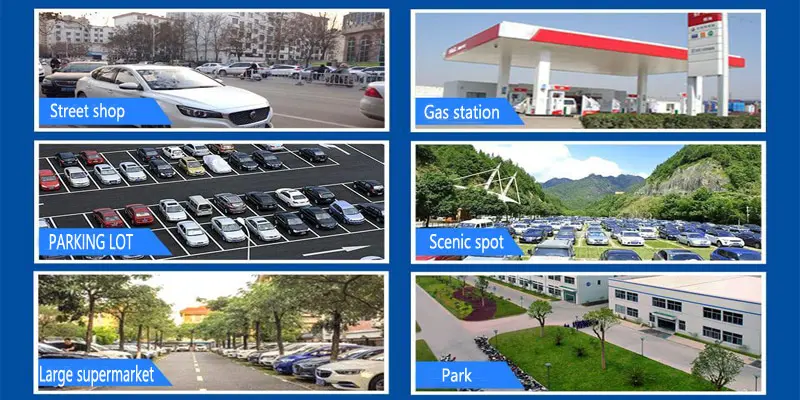
European car washing machines, particularly those manufactured in Germany and Italy, are traditionally associated with precision engineering and long-term mechanical durability. Many European brands have built strong reputations in mature markets with stable labor costs and predictable operating conditions.
In China, European systems are typically positioned as premium solutions. They are most often installed in flagship projects, luxury commercial properties, or brand-driven demonstration sites. However, this positioning comes with higher acquisition costs, more complex logistics, and increased dependency on imported spare parts, all of which directly affect ROI performance.
The most immediate difference between a chinese car washing machine and a European system is the initial investment. Chinese machines are manufactured domestically, which eliminates import duties, reduces shipping complexity, and shortens delivery timelines. European machines, by contrast, incur import taxes, higher logistics costs, and longer lead times.
Installation and commissioning further widen the gap. Chinese car washing machines are engineered around local electrical standards, water systems, and construction practices, enabling faster installation and lower labor costs. European systems often require adaptation to meet China’s GB standards, increasing both time and expense.

Over the long term, maintenance and spare parts availability play a decisive role. Chinese manufacturers typically provide immediate access to components and local technicians, while European brands often rely on imported parts and agent-based service networks.
To better understand how a chinese car washing machine compares with European equipment under real China market conditions, the table below summarizes the key differences.
| Dimension | Chinese Car Washing Machine | European Car Washing Machine |
| Initial investment | Significantly lower | 2–3× higher |
| Import duties & taxes | None (domestic) | Required |
| Delivery & installation | Fast and localized | Slower and more complex |
| Build quality | Industrial-grade, rapidly improving | Premium mechanical finishing |
| Washing performance | Stable and consistent | Comparable in daily use |
| Technology adoption | Fast, market-driven | Conservative |
| Spare parts availability | Immediate and low-cost | Limited and expensive |
| After-sales service | Local teams, rapid response | Agent-based, slower |
| Downtime risk | Low | Medium to high |
| Typical lifespan | 8–12 years | 12–15 years |
| Typical payback period | 12–24 months | 36–60 months |
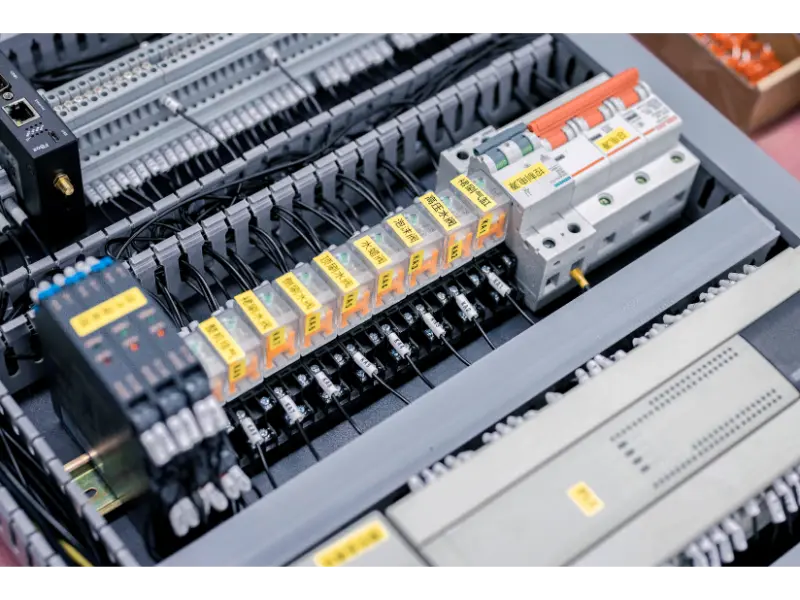
From a construction standpoint, European machines still demonstrate excellent mechanical consistency. However, the quality gap has narrowed significantly. Modern chinese car washing machines increasingly use galvanized or stainless steel frames, internationally recognized motors and pumps, and industrial-grade PLC control systems.
In real operating environments—urban dust, pollution, and high daily wash volumes—washing performance differences are minimal. Touchless and brush-based systems from both origins deliver comparable results when properly calibrated. In practice, wash chemistry, software tuning, and maintenance discipline have a greater impact on cleaning quality than country of manufacture.
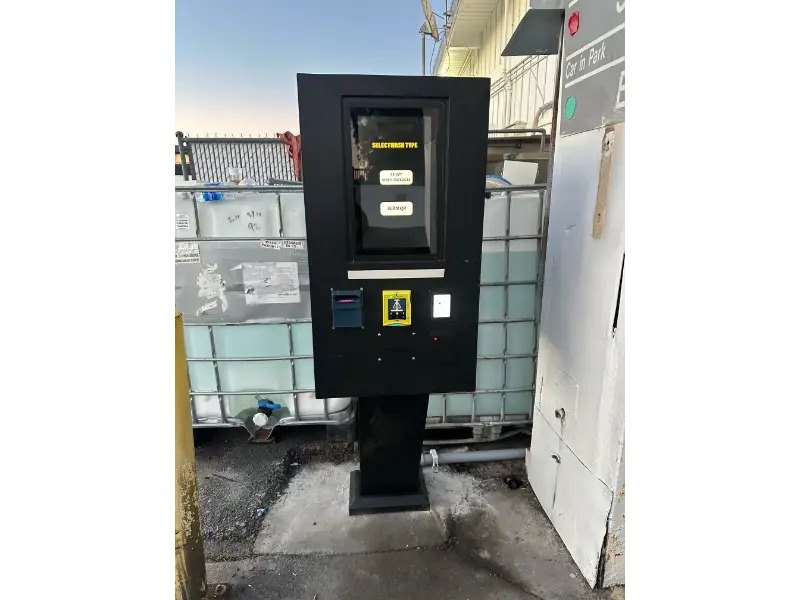
Chinese manufacturers also tend to adopt new technologies more quickly. Mobile payment integration, cloud-based monitoring, and centralized management platforms are now standard on many chinese car washing machines, reflecting the digitalized nature of China’s consumer and operator ecosystem.
European machines generally offer a longer theoretical lifespan. However, in China’s high-frequency operating environment, downtime cost often outweighs marginal lifespan advantages. A chinese car washing machine benefits from faster repair cycles, lower spare parts costs, and readily available technicians, which significantly reduces revenue loss caused by unexpected stoppages.
For most operators, operational responsiveness and service speed are more critical than long-term durability claims.

After-sales service is one of the most decisive factors in China’s car wash market. Domestic manufacturers typically provide localized service teams, Chinese-language documentation, and remote diagnostic support. European brands often rely on distributors or overseas coordination, which can slow response times and increase service costs.
In high-utilization sites, even short delays in technical support can have a direct impact on profitability.
Revenue potential for Chinese and European systems is broadly similar when installed at comparable sites. Average wash pricing, daily throughput, and annual operating days do not differ significantly based on machine origin.
The ROI difference is driven by cost structure. Lower initial investment, reduced maintenance expenses, and minimized downtime allow chinese car washing machines to recover capital much faster. In China market conditions, payback periods of 12 to 24 months are common, while European machines often require 36 to 60 months to achieve break-even.
Annual revenue is calculated by multiplying average wash price, daily wash volume, and annual operating days. Annual profit is determined by subtracting total operating costs from annual revenue. The payback period is calculated by dividing total investment by annual profit.
When this logic is applied to China market scenarios, chinese car washing machines consistently demonstrate higher capital efficiency and faster return on investment.
When selecting a chinese car washing machine, the manufacturer is as important as the equipment category itself. Among domestic suppliers, Shinewash is frequently chosen by operators seeking a balance between engineering quality, cost efficiency, and dependable after-sales execution.
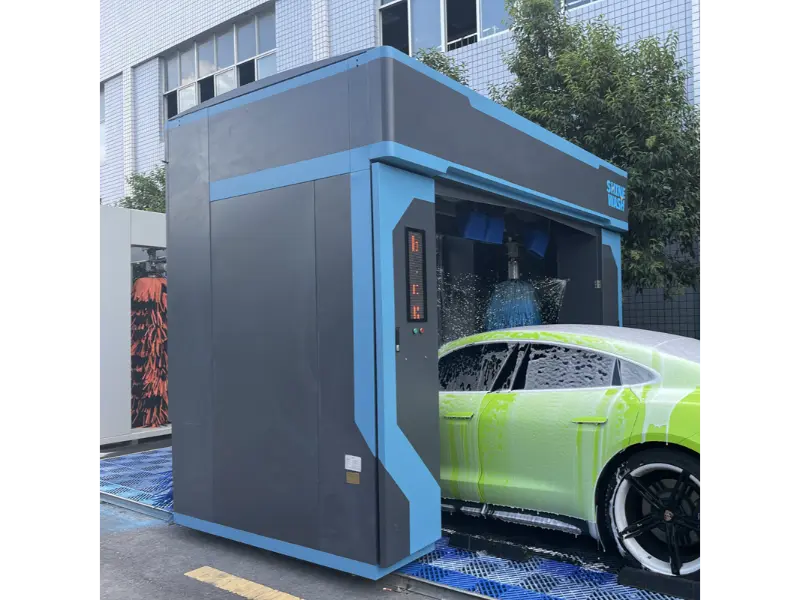
Shinewash offers a comprehensive portfolio of chinese car washing machines, including touchless rollover systems, brush-based rollovers, and tunnel car wash solutions. These systems are engineered specifically for high-frequency commercial use and support scalable deployment across multiple sites using standardized components.
From an investment perspective, Shinewash equipment aligns well with China’s ROI expectations. Competitive pricing, fast spare parts availability, and responsive local service help operators reduce downtime and maintain stable cash flow. In addition, Shinewash systems integrate seamlessly with mobile payments, cloud monitoring, and centralized management platforms, which are increasingly essential for chain operators.
For the majority of commercial car wash projects, a chinese car washing machine offers the most balanced solution. Competitive quality, strong technological capability, fast local service, and significantly shorter ROI cycles make domestic equipment the preferred choice for profitability-focused operators.
European machines remain suitable for prestige-driven projects, but from a pure business and return-on-investment perspective, established chinese manufacturers such as Shinewash are better aligned with China’s market realities.
Contact Shinewash experts, if you are interested in the Chinese car washing machine.