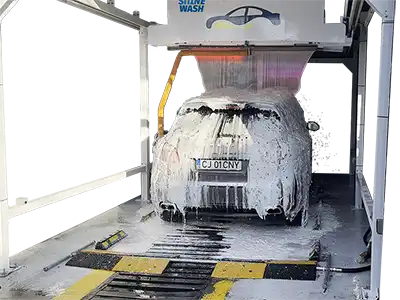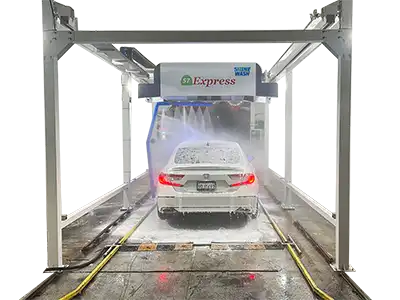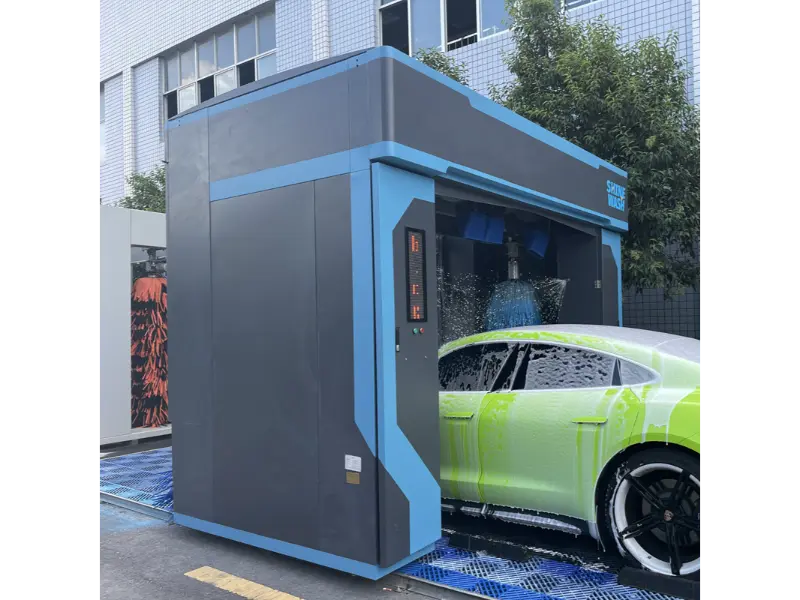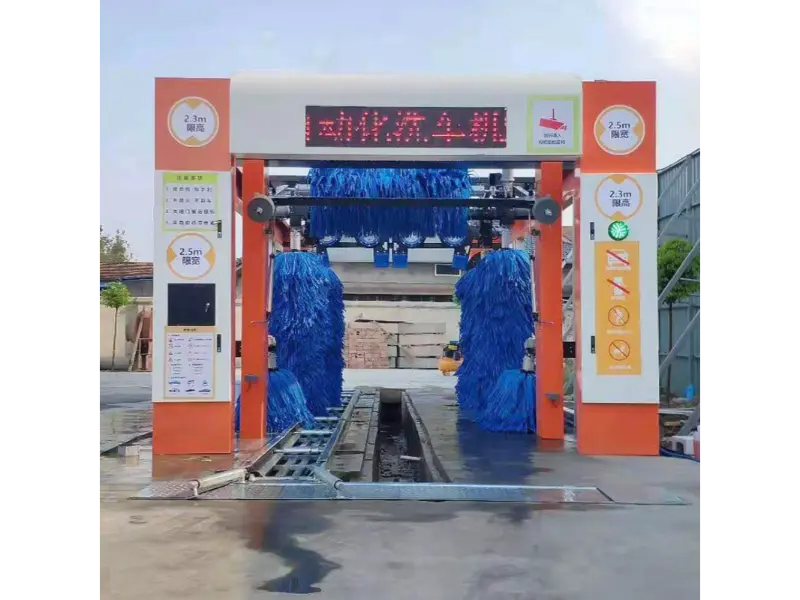
A touchfree car wash cleans vehicles without direct contact from brushes or cloth. It uses high-pressure water, cleaning chemicals, and automated washing technology to remove dirt and grime. This method is popular with drivers who want to reduce brush contact with their vehicle’s paint.
For car wash owners, a touchfree car wash system offers an automated solution for commercial washing operations. It can serve gas stations, car dealerships, service centers, and independent car wash businesses.
In this guide, we explain how touchfree car washes work, compare touch free vs. soft touch systems, and explore equipment costs and business opportunities.
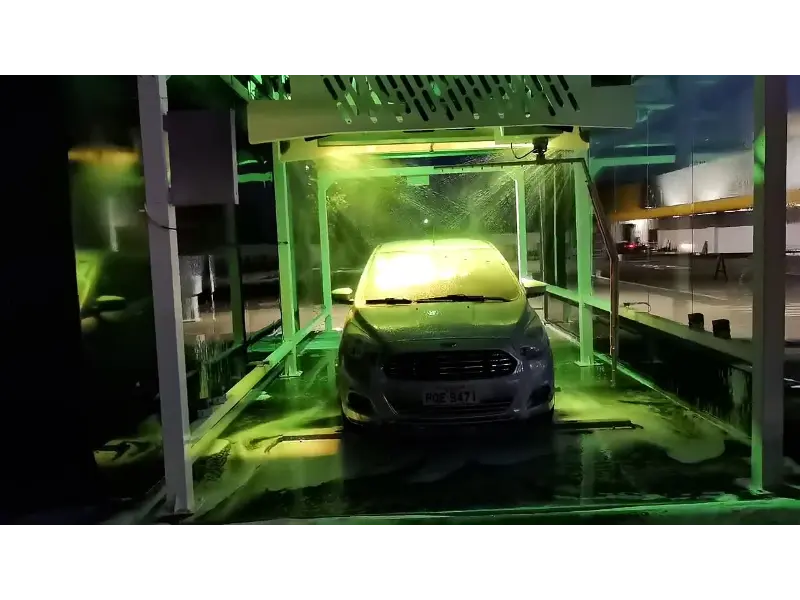
A touchfree car wash is an automatic washing system that cleans vehicles without physical contact from brushes. Instead, it combines high-pressure water with specialized detergents and other cleaning treatments.
Most automatic touchfree car wash machines use sensors to detect vehicle dimensions and adjust the washing process. The machine moves around the vehicle or uses a configured spray system to clean different surfaces.
This technology helps reduce the risk of brush-related paint damage. However, cleaning performance depends on water pressure, chemical selection, equipment design, and the amount of dirt on the vehicle.
Touchfree car washes are available in different configurations. Rollover systems wash one vehicle at a time within a fixed bay. Commercial operators can choose a system based on their site, customer demand, and available space.
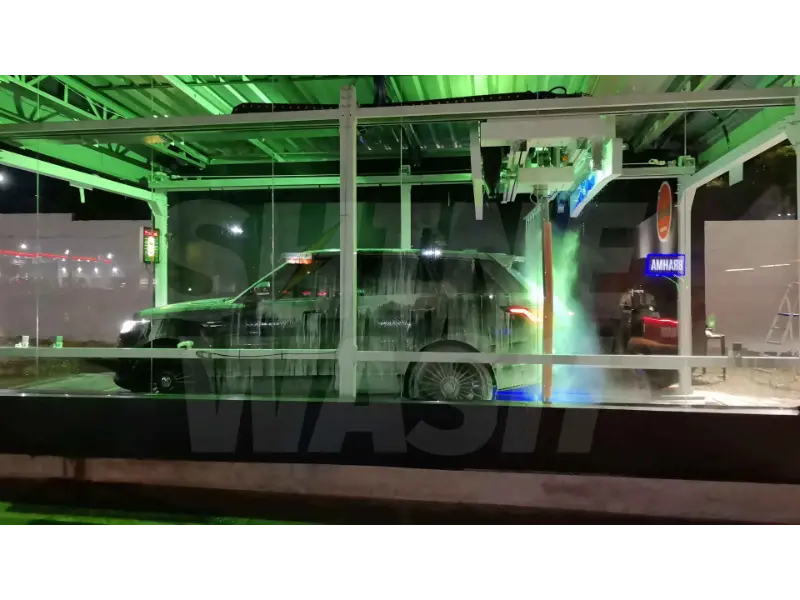
An automatic touchfree car wash follows a programmed washing cycle. The exact process depends on the machine configuration.
The driver positions the vehicle inside the wash bay. Sensors help the machine identify the vehicle’s size and position. The system then prepares the appropriate washing sequence.
The machine applies cleaning chemicals or foam to the vehicle’s exterior. These products help loosen road grime, dust, and other contaminants before rinsing.
High-pressure water jets remove loosened dirt from the vehicle’s body. Advanced systems can adjust spray positions to improve coverage across the front, sides, rear, and roof.
Some machines also include dedicated underbody washing or other optional cleaning functions.
Depending on the selected wash program, the machine applies a protective wax or finishing treatment. High-powered air blowers then remove much of the remaining water.
The vehicle is ready to leave the wash bay after the cycle is complete.
A touchfree car wash system offers several advantages for drivers and commercial operators.
Reduced Brush Contact
No brushes or cloths touch the vehicle during washing. This reduces the risk of scratches caused by contaminated contact materials. It does not eliminate every possible source of paint damage.
Automated Operation
The machine follows a programmed washing cycle. This helps standardize service and reduces the need for manual washing labor.
Flexible Wash Programs
Operators can offer different washing options. These may include basic rinsing, foam washing, wax application, and enhanced cleaning programs.
Suitable for Commercial Use
Touchfree systems can serve gas stations, independent car washes, dealerships, and automotive service centers. The right configuration depends on customer demand and site conditions.
Potential for Water Management
Some systems can integrate water recycling equipment. This can help reduce fresh water consumption, depending on the recycling system and local water conditions.
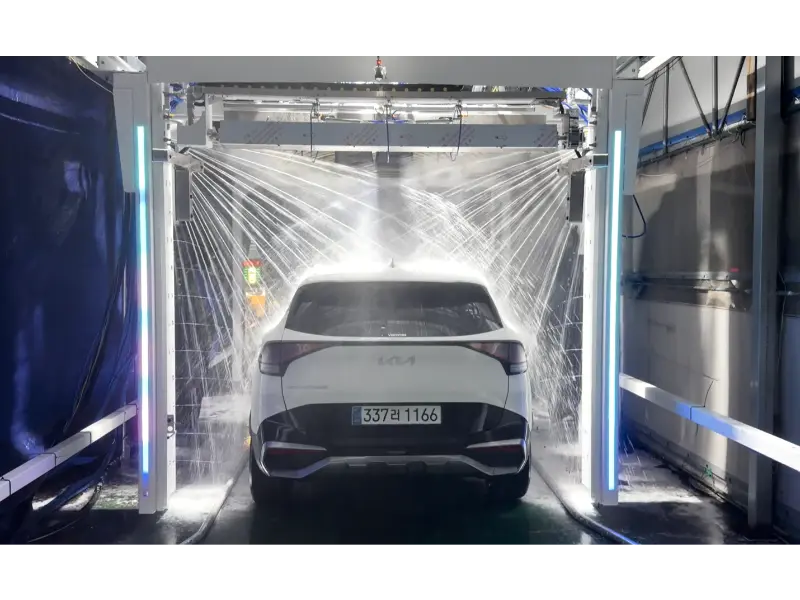
Touchfree and soft touch car washes use different cleaning methods. The main difference is whether cleaning materials physically contact the vehicle.
| Feature | Touchfree Car Wash | Soft Touch Car Wash |
| Cleaning method | High-pressure water and detergents | Soft brushes or cloth and detergents |
| Physical contact | No washing brushes contact the vehicle | Brushes or cloth contact the vehicle |
| Paint protection | Avoids brush-related contact risks | Contact materials can cause marks if contaminated or poorly maintained |
| Heavy dirt removal | May need suitable chemicals and additional wash stages | Physical contact can help remove certain stubborn contaminants |
| Maintenance | Pumps, nozzles, sensors, and chemical systems | Contact materials, drive systems, pumps, and other components |
| Key consideration | Water pressure and chemical performance | Contact material condition and cleaning performance |
Neither method is ideal for every situation.
A touchfree car wash is a good option for operators who prioritize contact-free cleaning. It also appeals to customers concerned about brush contact with their vehicle’s paint.
A soft touch car wash can provide additional mechanical cleaning action. However, its brushes or cloths require proper cleaning and maintenance.
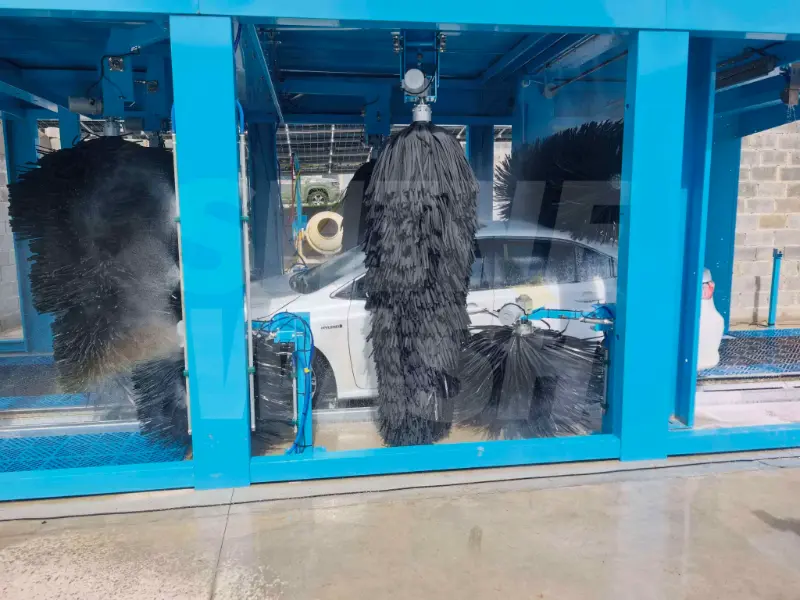
The best choice depends on the local market, vehicle conditions, operating costs, and customer preferences.
A touchfree car wash does not guarantee the removal of every contaminant. Heavy mud, baked-on dirt, and other stubborn residues can be difficult to remove without physical contact.
Cleaning chemicals play an important role. Incorrect chemical selection or insufficient application can reduce washing performance. Water pressure, nozzle positioning, and wash cycle design also affect the results.
Operators should select suitable cleaning products and maintain the equipment according to the manufacturer’s recommendations. They should also consider local water quality and the types of vehicles they serve.
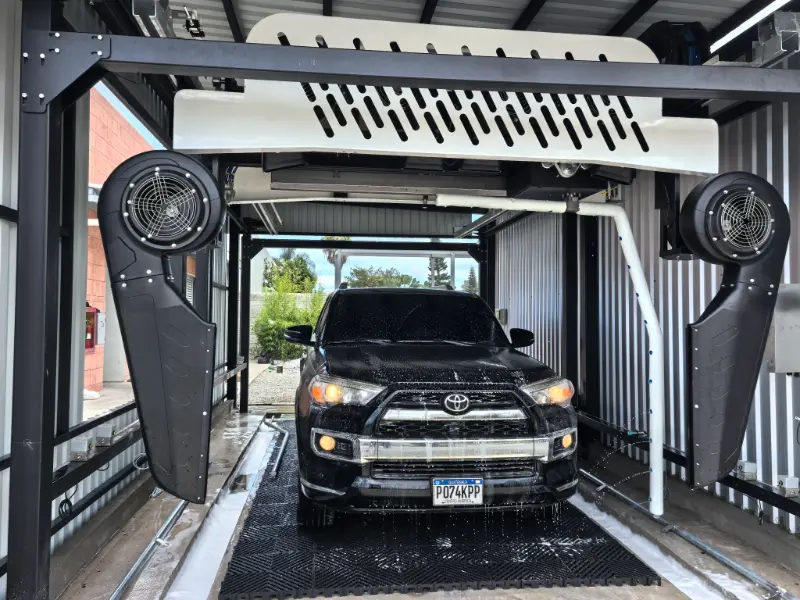
The cost of a touchfree car wash machine depends on its design, features, and installation requirements. A basic configuration and an advanced commercial system may have very different prices.
Consider these factors when planning your investment.
Rollover touchless car wash machines are designed to wash one vehicle at a time in a dedicated bay. Prices vary with the machine’s configuration, washing functions, drying system, and automation features.
Optional features can also affect the total investment.
Installation costs depend on the condition of the site. Buyers may need to prepare the foundation, drainage, water supply, electrical connections, and wash bay structure.
Shipping, local labor, and installation support can also affect the final cost.

Operating expenses include water, electricity, detergents, and routine maintenance. Air drying, water recycling, and other equipment options can influence ongoing costs.
Before purchasing, request a detailed quotation. Compare the equipment price with installation expenses and estimated operating costs.
A touchfree car wash can be a suitable business opportunity in the right location. Demand may come from drivers seeking convenient exterior cleaning and businesses looking to automate their services.
However, profitability depends on more than the machine itself.
Consider the following factors:
Prepare a business plan before investing. Estimate the number of washes needed to cover your costs. Compare that figure with realistic local demand.
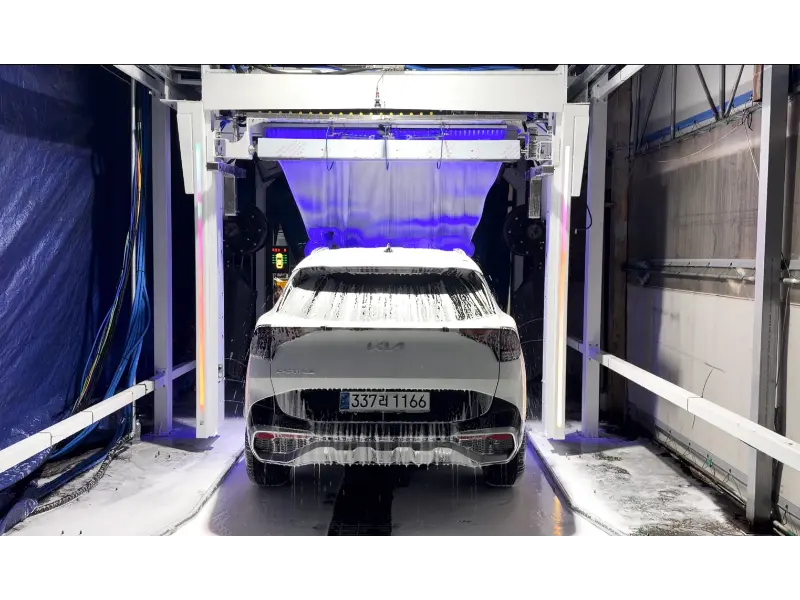
Commercial buyers should compare more than the initial purchase price. The right machine should fit the site, customer needs, and planned business model.
Cleaning Performance: Check the high-pressure washing system, nozzle coverage, chemical application, and available wash programs.
Vehicle Compatibility: Confirm the maximum vehicle dimensions supported by the machine. Consider the cars, SUVs, and other vehicles commonly found in your market.
Drying Capability: Review the air drying configuration and expected drying performance. This is especially important for operators who want to deliver a convenient customer experience.
Automation and Controls: Look for clear operating controls, vehicle detection, safety features, and remote diagnostic support where available.
Water Recycling: Consider whether a compatible water recycling system is appropriate for your site and local regulations.
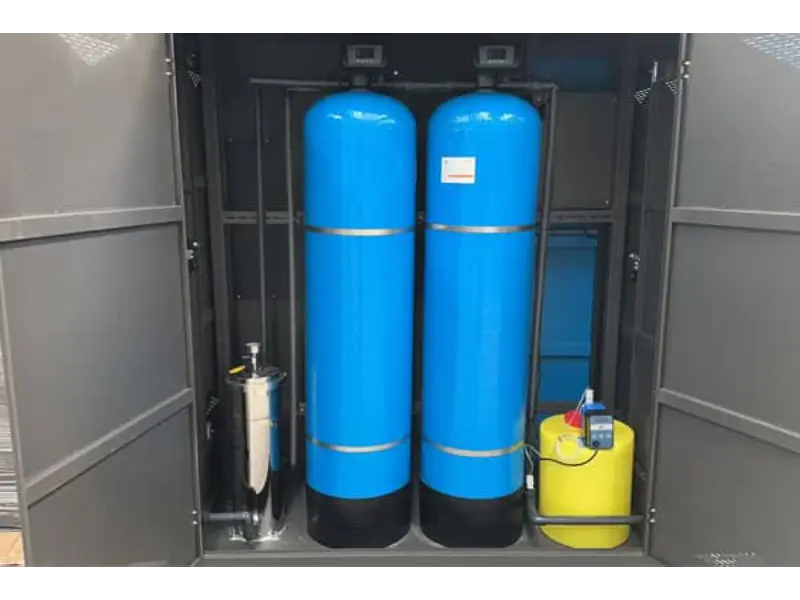
Supplier Support: Ask about installation guidance, spare parts, technical support, warranty coverage, and maintenance requirements.
A careful comparison helps you select equipment that fits your operating needs and long-term investment plans.
A touchfree car wash uses high-pressure water and cleaning chemicals to wash a vehicle without physical contact from brushes or cloths.
A touchfree system avoids brush-related contact risks. A soft touch system adds mechanical cleaning action. The better choice depends on cleaning needs, customer preferences, and maintenance requirements.
It can deliver effective exterior cleaning when the machine uses suitable pressure, detergents, and wash settings. Heavy or stubborn dirt may be more difficult to remove without physical contact.
The price depends on machine configuration, washing and drying features, shipping, and installation. Request a customized quotation to estimate the total investment.
It can be profitable with suitable demand, pricing, and cost control. Location, wash volume, operating expenses, and equipment reliability all affect the financial results.
Shinewash provides automatic touchless car wash solutions for commercial operators and investors. The right system can help you build an automated washing operation around your site’s requirements.
Whether you are opening a new car wash or upgrading an existing facility, our team can help you evaluate suitable equipment configurations.
Contact Shinewash to discuss your project, request machine specifications, and get a customized quotation.
Email:tori@carwashmachine.com
Whatsapp: +86 13619844700